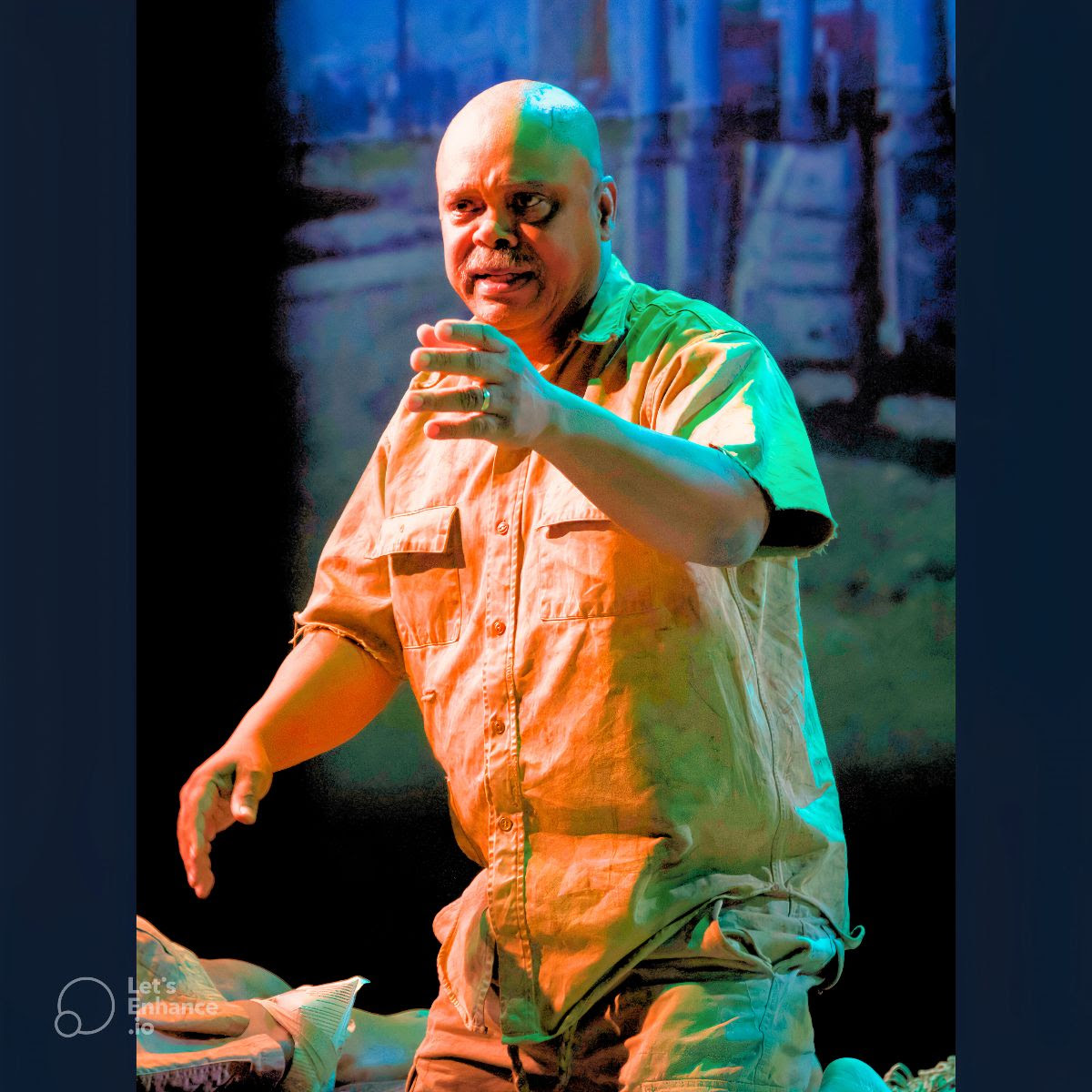
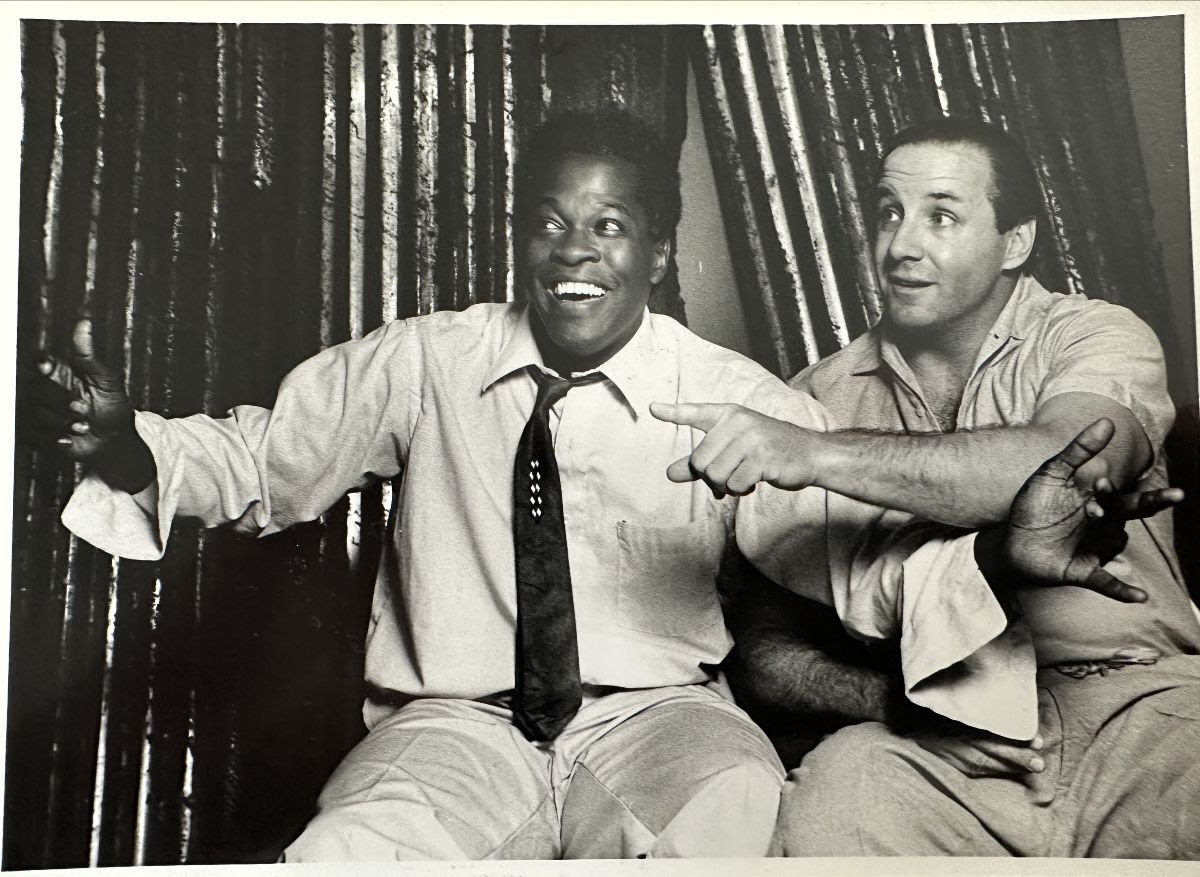
MetroStage at the Lyceum presents:
A Tribute to Athol Fugard
It is the early 1970’s. John and Winston are two political prisoners in apartheid South Africa. The setting is Robben Island off the coast but within sight of their homeland. An iconic play that Athol Fugard devised with John Kani and Winston Ntshona, that MetroStage produced in both 1990 and 2015.
Since Mr. Fugard died this past February, MetroStage is honored to pay tribute to his body of work and present a reading of this extraordinary play. By depicting the labor required of the political prisoners, their bond, and their commitment to telling the classic story of “Antigone” for their fellow prisoners, Fugard has created a dramatic, and historic masterpiece. As MetroStage director Thomas W. Jones II described in a 2015 interview, the play depicts “themes of solidarity, endurance, perseverance (that) are timeless”, and a “celebration of human dignity and freedom in the face of insurmountable oppression.”
“This reflects a very important part of MetroStage’s history since we produced many of Mr. Fugard’s plays over the last 30 years. We are proud to pay tribute to his work and the tremendous contribution he made during the years of apartheid and beyond with a reading of The Island, featuring two of MetroStage’s favorite actors who have performed in his plays for MetroStage productions.” Carolyn Griffin, Producing Artistic Director
Buy Tickets Now
Bios
Athol Fugard (1932-2025) was an internationally acclaimed South African playwright whose best-known work dealt with the political and social upheaval of the apartheid system in South Africa. He was educated at the University of Cape Town. His plays include Blood Knot, “Master Harold”…and the Boys, The Captain’s Tiger, Valley Song, My Children! My Africa!, A Lesson from Aloes, Boesman and Lena, The Island and the award-winning Sizwe Banzi is Dead. Mr. Fugard received six honorary degrees from esteemed colleges and was an Honorary Fellow of the Royal Society of Literature.
https://www.nytimes.com/2025/03/09/obituaries/athol-fugard-dead.html?unlocked_article_code=1.6U4.XF_X.YYxuGo4wthHk&smid=url-share
Doug Brown (Winston) has appeared as Winston in the two productions of The Island at MetroStage, in the 1990-91 season and in 2015. Other productions at MetroStage include Mooi Street Moves (Stix Letsebe) in 1993 by another South African playwright Paul Slabolepszy, the world premiere of Uprising (Charlie Pick, 2015), Gin Game (Weller Martin, 2017), and Painted Rocks at Revolver Creek (Nukain, another Athol Fugard play in 2018). Other favorite roles include Ma Rainey’s Black Bottom (Levi) Studio Theatre; Jitney (Turnbo) Ford’s Theatre; Fuddy Meers (Millet) Woolly Mammoth; Piano Lesson (Doaker) Actors’ Theatre of Louisville; The Colored Museum (Miss Roj) Studio Theatre; Fences (Bono) Ford’s Theatre; Radio Golf (Sterling Johnson) Milwaukee Rep.
Bill Grimmette (John) appeared in MetroStage’s production of Athol Fugard’s Blood Knot in 1987 as Zachariah and received a Helen Hayes nomination for Lead Actor. This was the first production in MetroStage’s first theatre in a 65 seat storefront in Alexandria. Bill retired from the stage in 2018 after 50 years performing. His final performance was as Hoke in Driving Miss Daisy with Karen Grassley from Little House on the Prairie. Other roles include Lear in King Lear (Atlas Theater 2018); Othello in Othello, (Virginia Shakespeare Festival 1994); Death and the Kings Horsemen (Elasin Oba, Ira Aldridge Theater Howard Univ. 1993); and Ghosts (Engstrand at Milwaukee Rep 1996). In addition, Bill has performed across the country and internationally as a Motivational Storyteller. His stories were framed in the guise of the African Griot, venerating the awesome legitimacy of the history and culture of AfrAmericans*.
*AfrAmericans is a construction designed by Bill to make the cultural label of African Americans more linguistically accessible to the storyteller by combining the two words into one. He did this by removing the oft used hyphen or space and avoiding the ‘O’ in Afro because there is no ‘O’ in either African or American. More importantly, Bill wanted to create a story for children whose very name signified their Fame. Thus, his original story of “The Magnificent Legends of the Aframer-Ican Icons” was about how enslaved Blacks rose from being the mark of the oppressed “Youcannots” to become the “Icons of I can” that liberated The Constitution from the tyranny of slavery.” The A frame is the fundamental leverage of uplift. Bill Grimmette
More Information
Buy Tickets Now
From an interview in 2015 in the Gazette Packet:
“Producing Artistic Director Carolyn Griffin said the show touches on everything important in a dramatic work. “It is highly political since it depicts the plight of the political prisoner in South Africa under apartheid law,” she said. “At the same time it is timely, timeless and universal in that there will always be highly charged political situations in parts of the world where there is oppression and incarceration.” She added, “It is a psychological study of incarceration, isolation, bonding under the most challenging circumstances — man’s inhumanity to man — and ultimately the triumph of the human spirit. It makes a political statement but also addresses the most fundamental human needs, hopes and desires for freedom, community, and family.” Fugard’s use of the Greek story of “Antigone” is a metaphor used to depict the political protest of the black South Africans in apartheid South Africa who fought the state and were imprisoned on Robben Island, the most famous being Nelson Mandela.